
103 homeless animals were transferred from a municipal animal control shelter to rescue groups in 2 different states in the middle of a hurricane evacuation. How did this happen? Before we even knew a storm was coming, I had prepared an effective contact list and communication plan. When a storm was actually heading our way, we had no time to waste. We put our plan into action. You can read about that situation in this news article: here.
All types of businesses and organizations can benefit from well-planned communication protocols. They’re useful at all times and crucial to a successful emergency plan.
Step 3 of Being Paws-itively Prepared: Develop Communication Protocols
In Step 2 of the Emergency and Disaster Preparedness Plan Checklist, we discussed forming your ERT (Emergency Response Team). Now in Step 3, let’s plan for the “who” and “how” of your emergency communications.
Effective communication protocols are crucial to turning potential chaos into an organized response. In an emergency situation, you’ll not only be communicating internally with your team. You will also be doing public relations and possibly, damage control.
This post walks you through the 8-step process of creating customized emergency communication protocols for your business. Be sure to download your free copy of the Emergency Contact List Template to help you create your “phone tree” (link below).
Step 1: Identify Potential Emergency Scenarios
The easiest way to complete this step is to review your risk assessment from Step 1. If you need to assess potential hazards to your business, review this post.
Begin developing your protocols by identifying potential emergency scenarios that could impact your business. These scenarios can include natural disasters such as earthquakes, floods, or wildfires. They may also include a health outbreak, power outage, or a crime.
In the South, all businesses have to be prepared to communicate before, during, and after a storm. Veterinarians and pet care businesses have the unique challenge of ensuring seamless communication with worried clients concerned about their beloved animal companions. You’ll need a well-thought-out communication plan to navigate such situations with care and compassion.
Step 2: Designate a Primary Point of Contact
Carefully consider which ERT member is best suited to be your primary spokesperson. Ideally, this will be your business owner (you). If you’re not comfortable in this role, choose someone who has a calm, professional demeanor. They should also know your business inside and out.
Your primary point of contact (PPC) will be the central coordinator for all communication efforts. They will be responsible for disseminating information to team members, clients, First Responders, and possibly, the media. Clear lines of communication will help streamline the flow of information and avoid confusion and misunderstandings.
It’s also important to designate a backup PPC in case your first choice is not available for some reason – they may be out of town or may even have been injured during the emergency situation.
Step 3: Create a Communication Tree/Contact List
You will want to have a comprehensive contact list right at your fingertips. This list should include all essential contacts such as your team members, suppliers, neighboring businesses, local authorities, and more. Organize the list by who needs to be contacted first to ensure that information reaches the right people promptly.
Remember to regularly update your list to make sure all contact information is accurate!
Also, keep in mind that you might not have internet or electricity during an emergency. You might be quickly evacuating your building because of a fire or other sudden life-threatening situation. I recommend backing up your list to the cloud + having a printed copy in a binder that you can grab and go. When I was managing animal shelters, I kept a short list of key contacts at my home.
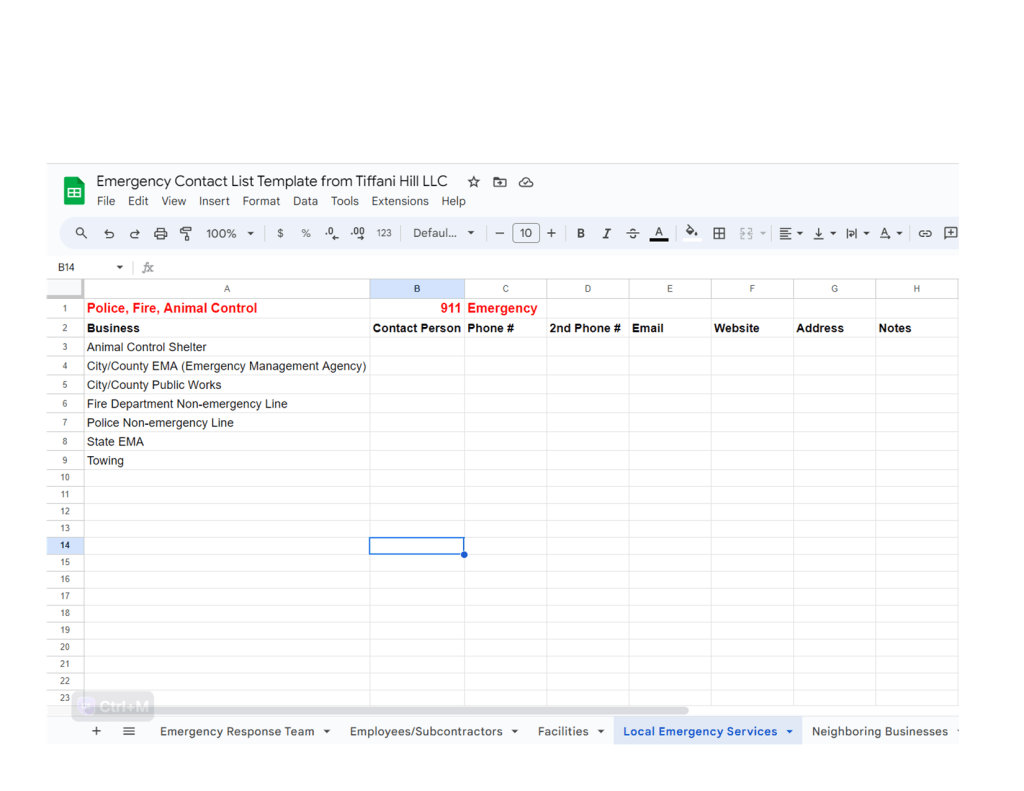
To help you get started building your contact list, I’ve created this 11-tab Excel spreadsheet template. You can customize it to fit your business. Download your free copy:
Step 4: Establish Backup Communication Methods
Be prepared for the possibility that you won’t have access to cell phone service, email, or social media during an emergency. How will you communicate with all the different people who need to know what’s going on?
In the aftermath of Hurricane Marilyn, my family communicated with me using a press team’s satellite phone. They were living in the Virgin Islands and their home was destroyed by the storm. I had been repeatedly calling the Red Cross to see if my family was on any of their emergency shelter lists. The press team was broadcasting from my parents’ front yard because it was the highest point on the island. Thankfully, they were kind enough to let my father call me using their equipment.
Emergency management and law enforcement officers have specialized communication equipment. They sometimes even work with amateur radio (aka ham radio) operators to communicate with each other and their communities.
Step 5: Draft Communication Guidelines
Have you ever said something that you wish you could take back? Are you like me – you think of better ways to say something or more clever remarks after the situation?
Give yourself and your backup spokesperson a headstart by drafting some talking points in advance. Provide practical and clear guidelines for what to say, to whom, and when to say it. Prepare draft messages that can be quickly customized and used during a variety of situations. They should provide clear and concise information, including safety instructions, updates on pet well-being, and details on your business operations.
Maintaining a friendly and empathetic tone will reassure clients and team members during challenging times.
Keep in mind that you may be sharing information with several different audiences: your team, your clients, First Responders, the media, and your community (which may include young children). Depending on the nature of the crisis, you may even find your business thrust onto the national stage. Plan ahead for what information is appropriate for different types of contacts.

Step 6: Outline Communication Procedures
Map out step-by-step procedures for how, when, and what you will communicate during an emergency. Think about how your primary point of contact will receive information from internal and outside sources.
How will they verify the accuracy of the information? This is getting more and more challenging all the time. You want to be sure that your messages are accurate and fact-based.
How will they disseminate information to your different audiences? Will you make phone calls, send emails, or post on social media? Do you need to contact the local newspaper or TV news station to broadcast your information to a wider audience? Will you need handouts or visuals to help you explain the situation and your response to the emergency?
After the incident, how will you follow up with all of your stakeholders? When and how will you do a hot wash (aka debrief, aka after-action review)? Post-incident debriefs with your team will help you identify areas for improvement and celebrate your successes.
Step 7: Conduct Training and Drills
Practice, practice, practice! It might not make you perfect but you will definitely feel more confident and prepared. Regularly train your team members in your emergency communication protocols and conduct drills to practice the procedures. Simulating emergency scenarios will help your team understand their roles and comfortably communicate your talking points.
Step 8: Review and Update Regularly
Your emergency communication protocols should be dynamic and subject to regular reviews and updates. As your business evolves, be sure to incorporate any changes or lessons learned from past emergencies into your plan.
Be proactive about being prepared. You and your team will be equipped with the tools your need to face emergencies with confidence and care. I’m available to answer your questions and help you with your planning. Contact me.

Have you downloaded your free copy of the Paws-itively Prepared Emergency and Disaster Plan Checklist yet? It’s a great tool to help you update or create your plans.
This isn’t a quick project you can complete in an afternoon – or even a day. You will need to commit some time and effort to this very important project.
I can help! Start with a complimentary, no-obligation consultation so we can discuss your specific planning needs.
And if you would more help with your planning, we can work together to develop a comprehensive plan tailored to your unique and individual business.
Stay tuned for our next post: Evacuating and Sheltering in Place: the 4th Step to be Paws-itively Prepared

This is part of a series of posts taking a closer look at the steps in the 9 Steps to Create Your Emergency and Disaster Preparedness Plan. You can click here to follow along with the Steps.
Photo by SevenStorm JUHASZIMRUS on Pexels.com

 Tiffani Hill LLC