

In Step 1, we reviewed an extensive list of potential hazards to your business, clients, and team. How is your risk assessment going? How many hazards are on your list?
Establishing Your ERT
Now let’s take a closer look at Step 2 of being Paws-itively Prepared: Establish an Emergency Response Team (aka ERT).
The process of building your effective ERT includes:
* Designating a leader or leaders;
* Defining clear roles and responsibilities for each member;
* Cultivating a culture of preparedness amongst the team; and,
* Regularly reviewing and updating your emergency response protocols with your team.
By following this process, you can ensure that you have a strong team who can leap into action during an emergency.
Someone Will Handle It
The owner of an impounded dog threatened to chain himself to a kennel with a loaded gun duct-taped to his hand. He had ripped his shirt off and was running around the animal shelter screaming obscenities. His sister confirmed that he did have a gun.
My team and I were able to respond quickly and he didn’t succeed with his plan. But we weren’t as coordinated as we could have been. We had previously only had a brief conversation about handling onsite threats.
Previous to this incident, we had discussed that when we encounter another threatening situation, someone would call for a police assist. Someone would move visitors and volunteers to a safe location. Someone would handle the situation.
But who is Someone? What if the director – me – wasn’t onsite to say you do this and you do that?
As you can imagine, we had a much deeper discussion. I worked with my team to create more detailed plans after that incident. We also added active shooter training to our new volunteer orientation.

Designate Leaders for Emergency Coordination and Decision-Making
IF YOU ARE A SOLOPRENEUR – you are the only person working in your business – you still need a “team”. This is especially true if you go into clients’ homes alone, like petsitters do. Know how to use the SOS feature on your cell phone (click here for iPhone; here for Android). You may also want to share your itinerary with a friend or family member.
During an emergency situation, having a clear chain of command is essential for a swift and coordinated response. And the designated leader can’t only be you, the business owner. You might not be available when something happens.
The first step in building your ERT is designating individuals responsible for emergency coordination and decision-making. These leaders will act as the pillars of support during stressful situations.
Look for team members who demonstrate strong leadership qualities, remain composed under pressure, and possess a deep understanding of your business operations. These designated leaders will be the go-to persons for assessing emergencies, making critical decisions, and effectively communicating with the entire team. They will also coordinate with any external agencies that come to their aid.
Define Clear Roles and Responsibilities for Team Members

A well-defined Emergency Response Team operates smoothly when each member knows their role and responsibilities during emergencies. By assigning clear roles, you empower your team members to perform at their best and contribute effectively to the overall response effort.
Identify each team member’s strengths and experiences. Then allocate responsibilities based on their skills and comfort levels. It’s important to be certain that each member feels comfortable accepting the additional responsibility.
Depending on the size of your staff and facility, you may have on your team a:
*Medical Response Leader: This individual will take charge of all medical-related decisions during emergencies, working closely with veterinary staff to ensure the best possible care for the animals.
*Logistics Coordinator: Responsible for organizing resources, supplies, and transportation to support the emergency response efforts seamlessly.
*Communication Liaison: In charge of keeping staff informed about the situation, coordinating with external agencies and potentially, the media, and maintaining clear communication with your clients.
*Safety Officer: Ensures the safety of the humans – clients and staff – and implements necessary precautions during emergencies, securing the facility and everyone onsite.
Cultivate a Culture of Preparedness through Continuous Training
Did you know that OC spray (aka pepper spray) reactivates when you take a shower? That was a very unpleasant surprise.
I had brought in a defensive tactics trainer. He taught us how to better defend ourselves with our batons. Then he sprayed us with that nasty substance and pointed us to buckets of water to stick our faces into. He later told us that washing with milk was more effective but he wanted us to get the full effect. If we were going to potentially spray an animal or person in self-defense, we needed to know what they were going to experience. Police officers actually have to be tasered before they can deploy that weapon. Um, no, I have no desire to go through that training.
I prioritize continuous training whenever I lead a team. Fortunately, there is a wide variety of no- and low-cost training available for animal care professionals. Of course, you know that it is important to check the reliability of any sources you find on the internet…
Preparation is the key to handling emergencies with confidence and efficiency. Regular training and drills are essential to cultivate a culture of preparedness within your ERT. These exercises help team members hone their decision-making skills, improve coordination, and identify areas for improvement.
Encourage open feedback and discussions after training sessions. Allow team members to share their insights and ideas. A collaborative environment fosters continuous growth and strengthens the team’s bond.
Regularly Review and Update Emergency Response Protocols
In the ever-evolving world of animal care, staying adaptable is crucial. Regularly reviewing and updating your ERT’s emergency response protocols ensures they remain relevant and effective in the face of changing circumstances.
Welcome feedback from your team members and be receptive to their suggestions for improvement. A dynamic ERT is always open to innovation and seeks ways to enhance its response capabilities.

Conduct Regular ERT Evaluations
Regular evaluations of your ERT’s performance are essential to ensure that your team is operating effectively. Conduct evaluations after each emergency to identify areas for improvement and address any issues that arose during the response.
Image by StartupStockPhotos from Pixabay
Celebrate Successes and Continuous Improvement
Finally, celebrate the successes of your ERT. Recognize the hard work and dedication of your team members. Celebrating successes helps to build morale and foster a sense of camaraderie.
At the same time, continue to seek ways to improve your ERT’s response capabilities. A dynamic and adaptable team is always looking for ways to enhance their performance and better serve the clients and animals under their care.
Stay vigilant, stay prepared, and prioritize the safety and well-being of everyone involved in your business. I’m available to answer your questions and help you with your planning.
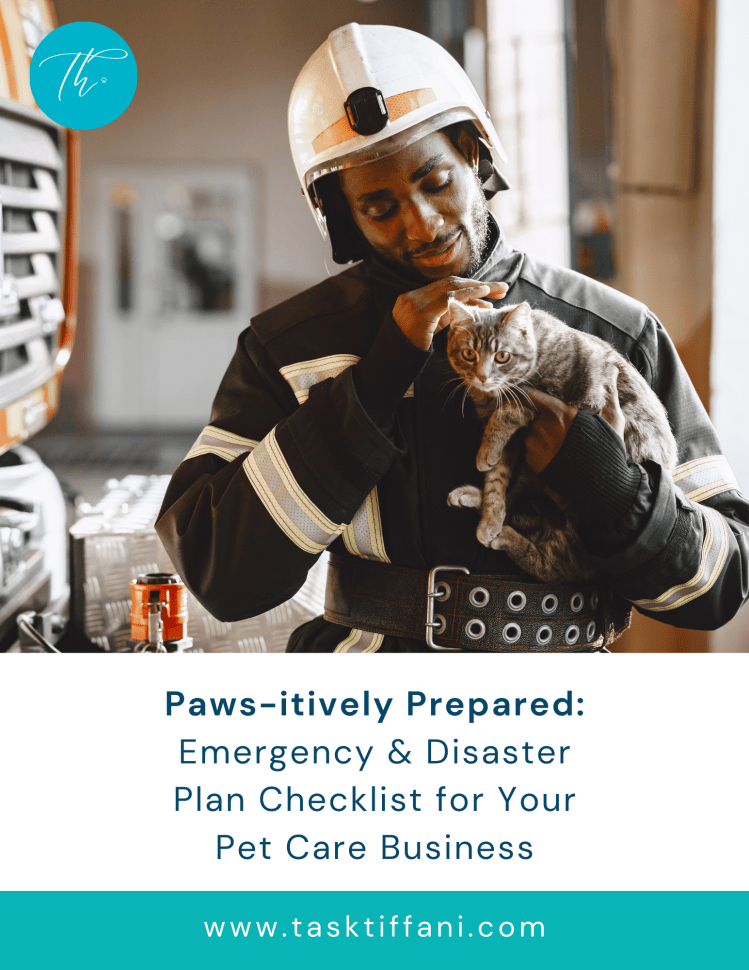
Have you downloaded your free copy of the Paws-itively Prepared Emergency and Disaster Plan Checklist yet? It’s a great tool to help you update or create your plans.
This isn’t a quick project you can complete in an afternoon – or even a day. You will need to commit some time and effort to this very important project.
I can help! Start with a complimentary, no-obligation consultation so we can discuss your specific planning needs.
And if you would more help with your planning, we can work together to develop a comprehensive plan tailored to your unique and individual business.
Stay tuned for our next post: Developing Communication Protocols: the 3rd Step to be Paws-itively Prepared
This is part of a series of posts taking a closer look at the steps in the 9 Steps to Create Your Emergency and Disaster Preparedness Plan. You can click here to follow along with the Steps.
Photo by Sam Lion: https://www.pexels.com/photo/adorable-dog-in-life-jacket-on-white-background-5733425/

 Tiffani Hill LLC